Compostable Packaging and the Circular Economy – How Bagasse Closes the Loop
From waste to resource: the bagasse journey
Bagasse begins as the fibrous residue left after sugarcane juice extraction. Rather than sending this by‑product to landfill, producers collect and pulp the fibres, mould them into plates, bowls and containers using heat and pressure, then trim and sterilise them for food safety. By transforming agricultural waste into high‑performance tableware, bagasse packaging helps reduce landfill waste and supports circular manufacturing.
Biodegradability and compostability
Bagasse products decompose naturally into nutrient‑rich soil within months. Commercial composting facilities typically break down bagasse in 60‑90 days, and the resulting compost can enrich gardens and farms. Unlike plastic, bagasse does not release harmful chemicals during decomposition. The carbon released during decomposition is offset by the carbon absorbed during sugarcane growth, making bagasse effectively carbon‑neutral.
Circular economy in practice
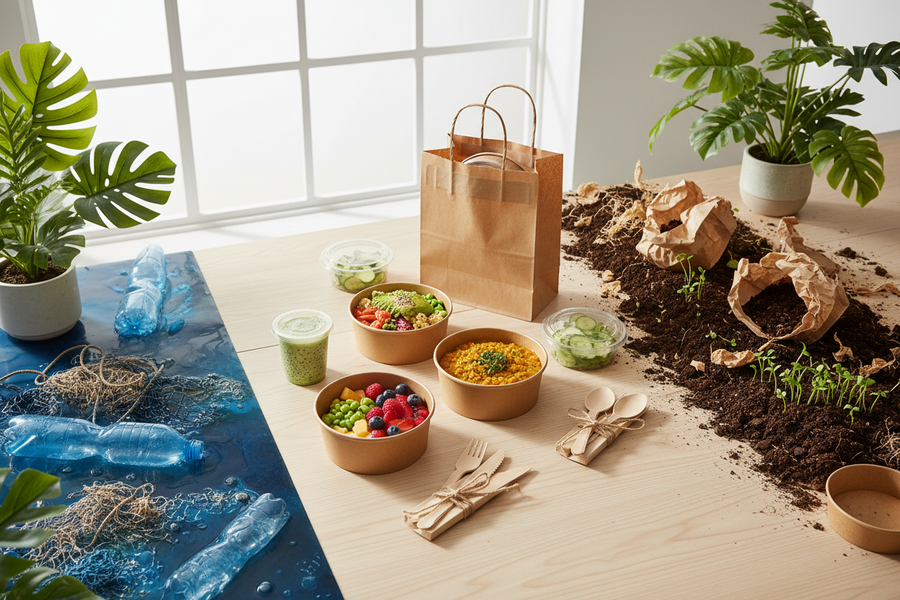
The circular economy aims to keep resources in use for as long as possible. Bagasse packaging embodies this principle. Sugarcane is harvested and pressed for juice; the leftover fibres become tableware; and after use, the products return to the earth as compost. This cycle reduces reliance on virgin materials, minimises waste and mitigates greenhouse‑gas emissions. Responsible sourcing, energy efficiency and waste reduction further enhance sustainability during production.
Benefits for businesses and communities
Adopting compostable packaging offers practical benefits:
- Reduced waste fees: Compostable products divert waste from landfills, lowering disposal costs.
- Positive brand image: Consumers increasingly prefer businesses that prioritise sustainability.
- Regulatory compliance: Growing regulations, such as the EU’s Single‑Use Plastics Directive, encourage businesses to choose alternatives like bagasse.
- Food safety: Bagasse tableware is tree‑free, PFAS‑free and suitable for hot and cold foods.
Conclusion
Compostable packaging isn’t just a trend; it’s a crucial step toward a sustainable future. By choosing bagasse products, you support a circular economy that turns waste into resources and honours the planet’s natural cycles.
🛒 GreenPlatter: Your Sustainable Partner
GreenPlatter helps businesses transition smoothly to eco-friendly packaging with:
- Wide range of compostable products
- Affordable bulk pricing
- Fast and reliable delivery
- Commitment to sustainability
Related post

01
May