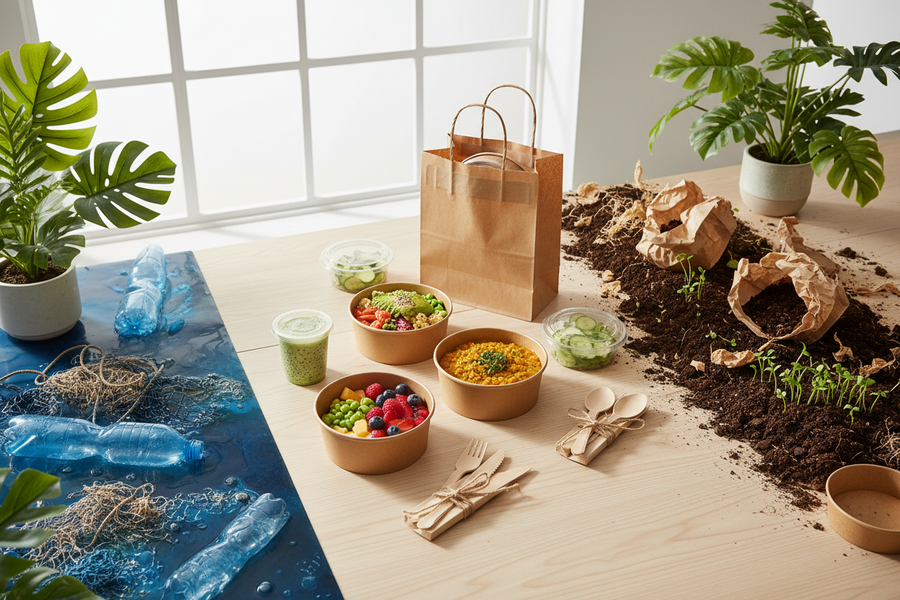
The Environmental Impact of Single‑Use Plastic : Understanding the Crisis
Plastic and greenhouse‑gas emissions
Plastic production generated 1.8 billion tonnes of greenhouse‑gas emissions in 2019, representing 3.4 % of the world’s total emissions. The extraction and transport of fossil fuels, coupled with manufacturing and disposal of plastics, contribute significantly to carbon emissions. As the production of plastic is expected to triple by 2060, its contribution to global warming will only increase.
Pollution and persistence
Plastic waste doesn’t just disappear. It can persist in the environment for centuries, breaking down into tiny particles that contaminate soil, water and air. About 22 % of plastic waste ends up in the environment, much of it in the ocean where it harms marine life. Through food, water and packaging, microplastics find their way into our lungs, livers, spleens and kidneys. Two‑thirds of all plastic waste comes from single‑use and short‑lived products, and less than 10 % of global plastic waste has been recycled.
Ecological and health impacts
Plastic pollution threatens biodiversity by entangling or poisoning wildlife. In marine environments, turtles, seabirds and fish mistake plastic fragments for food. On land, microplastics degrade soil health and can reduce crop yields. Plastic waste also releases toxic chemicals as it degrades, contaminating water and entering the food chain.
Global response and solutions
Recognising the scale of the crisis, 193 United Nations Member States agreed in 2022 to develop a legally binding agreement to end plastic pollution across the entire life cycle of plastics. Solutions start at home: reduce single‑use plastic, opt for reusable or compostable alternatives, recycle properly and support brands that prioritise sustainability. Advocacy matters too – urge businesses and policymakers to phase out unnecessary single‑use plastics.
Why sustainable materials matter
Switching to materials like bagasse helps cut greenhouse‑gas emissions and reduce waste. Bagasse products are renewable, low‑carbon and compostable. Choosing eco‑friendly options isn’t just good for the environment – it sends a message that consumers want a future free from plastic pollution. Every plastic straw or plate you refuse brings us closer to that goal.
🛒 GreenPlatter: Your Sustainable Partner
GreenPlatter helps businesses transition smoothly to eco-friendly packaging with:
- Wide range of compostable products
- Affordable bulk pricing
- Fast and reliable delivery
- Commitment to sustainability
Related post

01
May