

EN13432 Certification Explained: What UK Food Businesses Need to Know
If you're a café, takeaway, caterer or food truck weighing up a switch to compostable packaging, you've probably seen the term EN13432 printed on product listings — often without much explanation. Here's what it actually means, why it matters, and how to use it to avoid getting caught out by greenwashing.
What is EN13432?
EN13432 is the European standard that defines what "compostable" actually means for packaging. To be certified, a product has to meet strict criteria tested by an accredited lab, including:
- Biodegradation — at least 90% of the material must break down into water, CO2 and biomass within 6 months under industrial composting conditions
- Disintegration — after 12 weeks of composting, no more than 10% of the material can remain as fragments larger than 2mm
- No harmful residue — the resulting compost must not harm plant growth or contain heavy metals above set limits
- Material composition — at least 90% of the material's dry weight must be biodegradable
In short: EN13432 is the difference between a product that's genuinely engineered to compost and one that's simply labelled "eco-friendly" with nothing to back it up.
Why it matters for your business
Three practical reasons UK food businesses should care about this specific certification, not just general green claims:
1. UK greenwashing rules are tightening
The Competition and Markets Authority's Green Claims Code means businesses can be held responsible for environmental claims made about products they sell — including packaging supplied to their customers. Serving food in packaging that claims to be compostable but isn't certified is a real commercial risk, not just an ethical one.
2. Commercial composting facilities check certification
Not all "compostable" packaging is accepted at industrial composting facilities. Many require EN13432 certification (or the equivalent Seedling logo) before they'll take material, because uncertified products can contaminate their compost output.
3. It's the fastest way to evaluate a supplier
When comparing packaging suppliers, asking a simple question — "can you show me your EN13432 certificate for this specific product?" — separates genuine manufacturers from resellers who don't actually know their supply chain.
What to ask your packaging supplier
- Is the certificate for this exact product, or a general company certification?
- Which certification body issued it (e.g. TÜV Austria, DIN CERTCO)?
- Does the certificate cover industrial composting, home composting, or both? (Most bagasse and PLA products are industrial-only.)
Where bagasse fits in
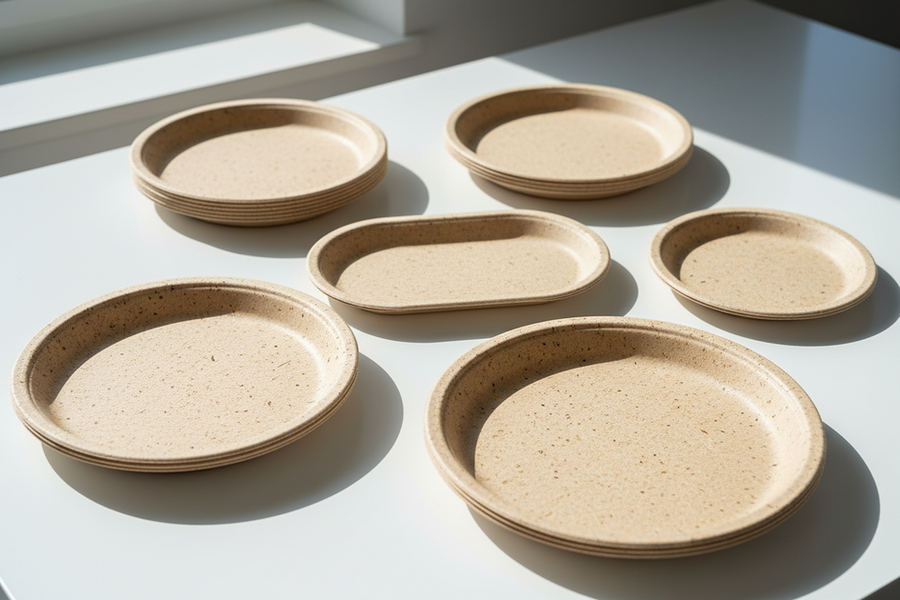
Sugarcane bagasse — the fibrous by-product left over after sugarcane is crushed for juice — is one of the materials that certifies well under EN13432, since it's a natural plant fibre with no added plastics, binders or coatings. Exact breakdown times depend on the composting facility and conditions, so check the certificate and your local composting route rather than relying on a headline number.
If you're evaluating packaging for your business, the certificate is the one thing worth asking for before anything else — price and design matter, but they mean nothing if the compostability claim doesn't hold up.