

Single-Use Plastic Ban UK: What Takeaways Can and Can't Use in 2026
Quick answer: Since 1 October 2023, businesses in England can no longer supply single-use plastic cutlery, balloon sticks, or polystyrene (expanded or extruded) cups and food containers. Single-use plastic plates, trays and bowls are restricted: you can't sell them on their own to the public, but you can still use them as packaging when they're pre-filled or filled with food at the point of sale. Wales and Scotland have their own bans, and in some areas they go further than England.
The England ban turns three this month, yet we still hear the same questions from takeaways, cafés, street-food traders and caterers every week. This guide sets out what the rules actually say, where people most often get caught out, and what to use instead.
What is banned in England?
The Environmental Protection (Plastic Plates etc. and Polystyrene Containers etc.) (England) Regulations 2023 came into force on 1 October 2023. They sit alongside earlier restrictions on plastic straws, stirrers and cotton buds that started in October 2020.
| Item | Status in England | What it means for your business |
|---|---|---|
| Single-use plastic cutlery | Banned | You can't supply plastic knives, forks, spoons or chopsticks to customers. |
| Polystyrene cups and food containers (including lids) | Banned | No expanded or extruded polystyrene for ready-to-eat food or drinks, even if pre-filled. |
| Single-use plastic balloon sticks | Banned | Relevant for events and party caterers. |
| Single-use plastic plates, trays and bowls | Restricted | Can't be sold empty to the public. Still allowed as packaging when pre-filled or filled at the point of sale. |
| Plastic straws and stirrers | Restricted since 2020 | Straws only available on request for medical or accessibility reasons in specific settings. |
How the rules differ in Wales and Scotland
Scotland introduced its ban on 1 June 2022. It covers single-use plastic cutlery and plates, drinks stirrers, balloon sticks, and polystyrene food and drink containers and cups, with exemptions for plastic straws needed for medical or accessibility reasons.
Wales introduced its ban on 30 October 2023. It covers plates, cutlery, drinks stirrers, balloon sticks, and polystyrene cups and takeaway containers. Importantly, the Welsh ban explicitly includes paper plates with a laminated plastic surface, which catches out many businesses that assume any paper plate is fine.
If you trade across borders, for example at festivals or through events catering, it's safest to work to the strictest set of rules wherever you serve.
The 5 most common mistakes
1. Assuming "biodegradable" or "compostable" plastic is exempt
It isn't. The bans cover single-use items made wholly or partly of plastic, and that includes bio-based, biodegradable and compostable plastics such as PLA. A PLA fork is still a plastic fork under the rules. Plant-fibre and wooden alternatives are what take you out of scope.
2. Using plastic-lined or plastic-coated paper plates
Items made partly of plastic are in scope, so a paper plate with a plastic coating or lining can count as a single-use plastic plate. Always check with your supplier what the plate is actually made from.

3. Keeping polystyrene clamshells because the food is "pre-packed"
The packaging exemption applies to plastic plates, trays and bowls, not to polystyrene. Polystyrene food and drink containers for ready-to-eat food are banned outright, whether you fill them in front of the customer or in advance.
4. Selling packs of plastic plates to the public
Takeaways can still serve food in a plastic bowl or tray, but shops and market stalls can't sell empty packs of single-use plastic plates, trays or bowls to consumers.
5. Forgetting about cutlery
Many businesses switched their containers but kept plastic cutlery in the bag. Cutlery is one of the clearest bans in all three nations.

Compliant swaps for every banned item
The easiest way to stay compliant is to move away from plastic entirely. Here's what food businesses typically switch to:

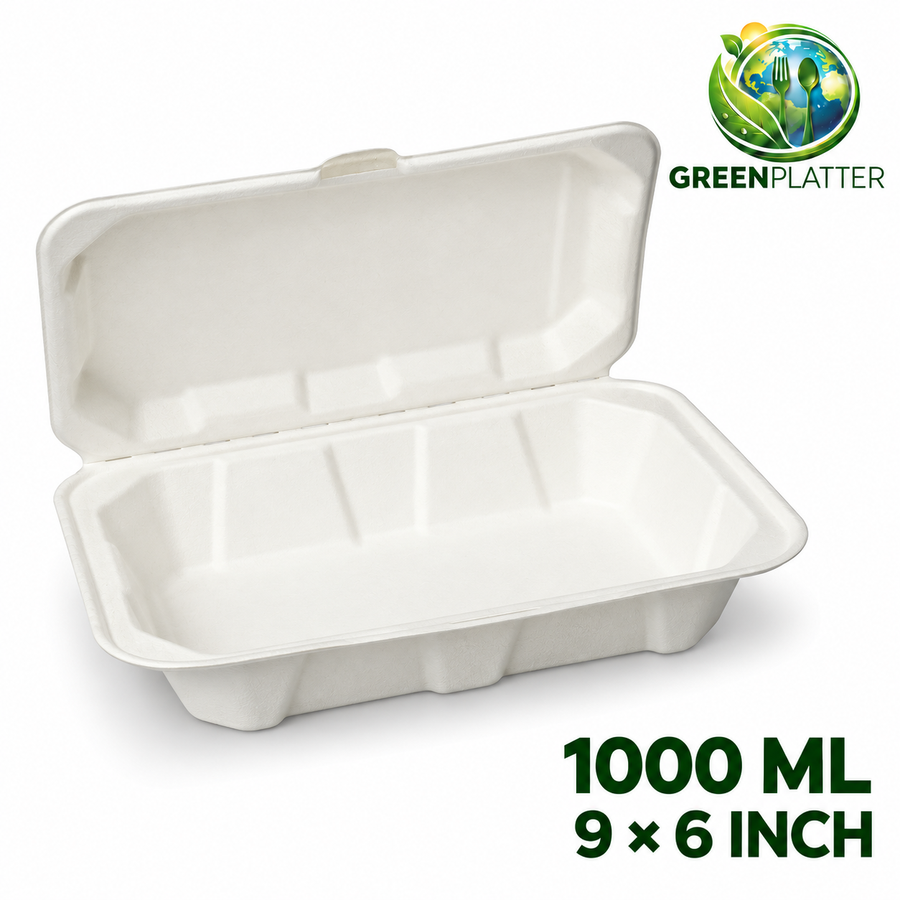
- Polystyrene clamshells → bagasse clamshell boxes. Sturdy, grease-resistant and suitable for hot food.
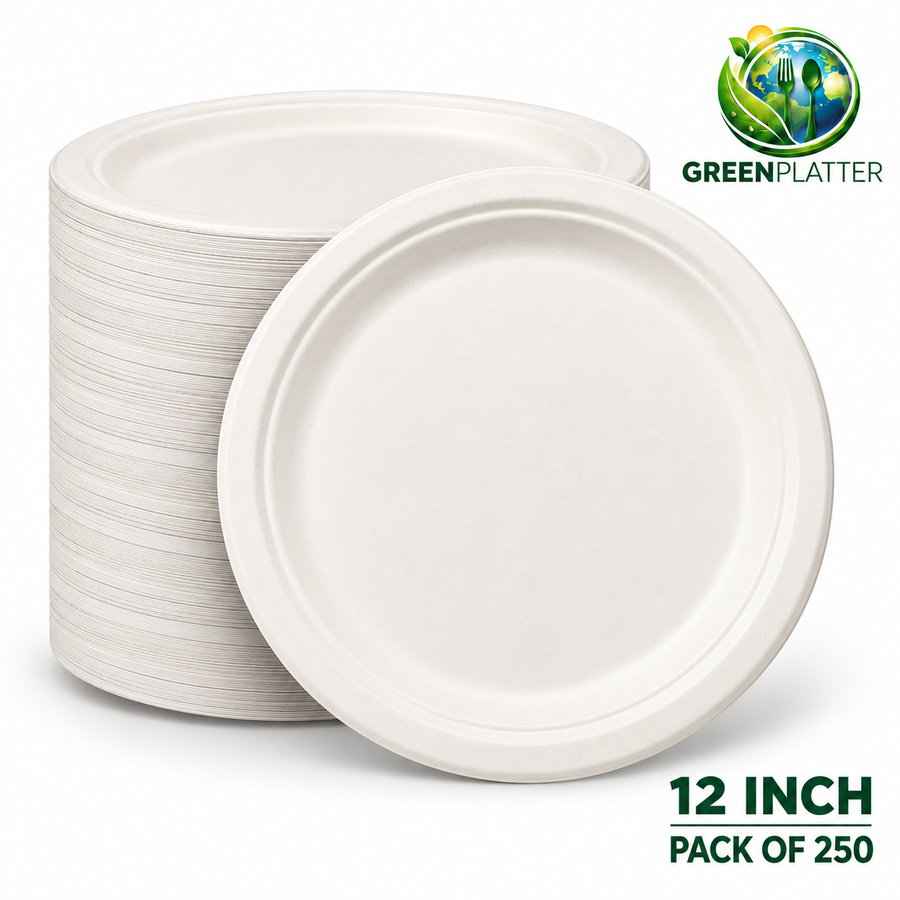
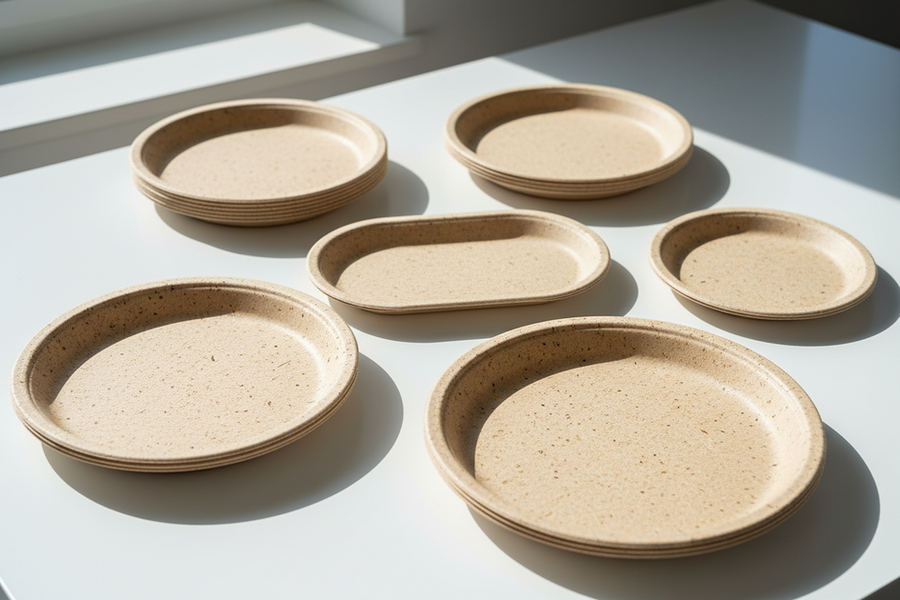
- Plastic or laminated paper plates → bagasse plates in a range of sizes. Not sure which size you need? See our disposable plate size guide.
- Plastic bowls → bagasse bowls for soups, curries, salads and desserts.
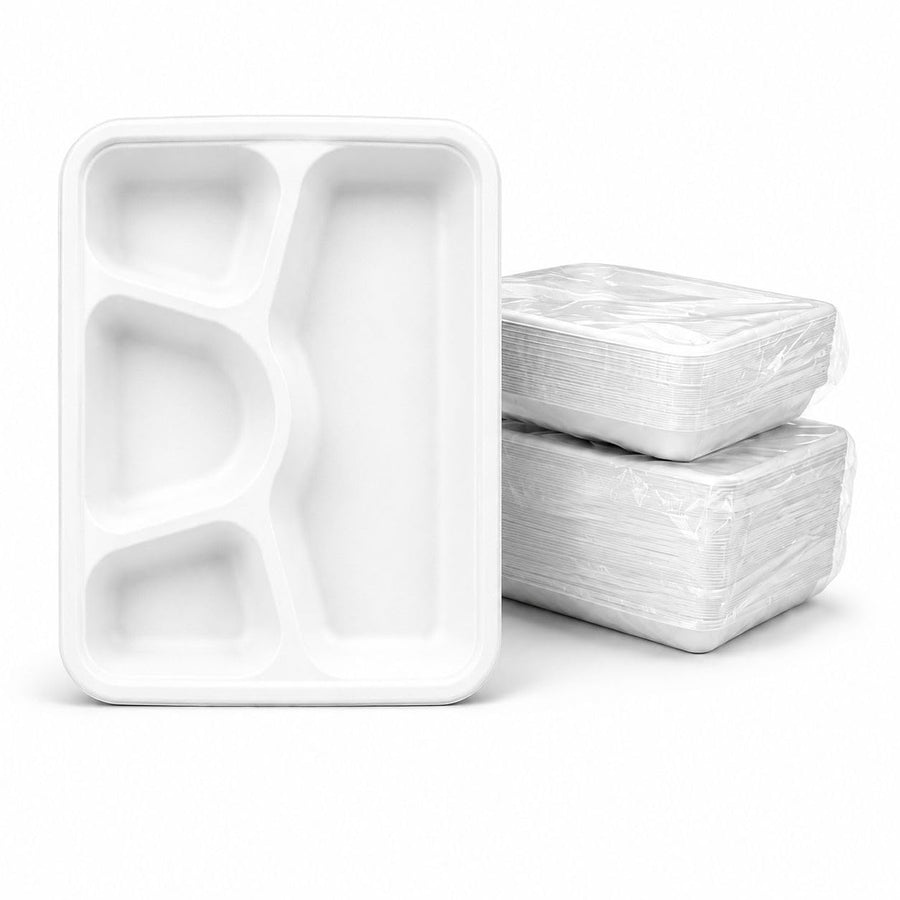
- Plastic trays → bagasse trays and pizza plates.
- Plastic cutlery → wooden cutlery.
- Polystyrene cups → plant-fibre cups.
- Plastic deli pots → round kraft food containers.
- Plastic carrier bags → paper bags.
Our bagasse range is made from sugarcane fibre by a manufacturing partner whose materials are certified to EN 13432, OK Compost (TÜV Austria) and BPI Compostable standards. Want to know how bagasse compares with plastic? Read Bagasse vs Plastic or learn more about bagasse.
Who enforces the ban, and what happens if you break it?
In England, the rules are enforced by local Trading Standards teams, who can issue civil sanctions including financial penalties. Wales and Scotland have their own local authority enforcement. Beyond fines, the bigger risk for most businesses is reputational: customers increasingly notice, and comment on, plastic and polystyrene packaging.
Frequently asked questions
Is the single-use plastic ban UK-wide?
No. England, Scotland and Wales each have their own legislation, with different start dates and slightly different lists of items. Northern Ireland has separate rules, so check local guidance if you trade there.
Can I still use plastic takeaway containers in England?
Yes, non-polystyrene plastic plates, trays and bowls can still be used when they are packaging for food that is pre-filled or filled at the point of sale. Polystyrene containers are banned.
Are compostable plastic (PLA) forks allowed?
No. Biodegradable and compostable plastics are still plastics under the regulations. Wooden or plant-fibre cutlery is the compliant option.
Are paper plates banned?
Uncoated paper and plant-fibre plates such as bagasse are not in scope. Paper plates with a plastic coating or lining can be treated as plastic plates, and Wales specifically names laminated paper plates in its ban.
Are bagasse plates and boxes compliant?
Bagasse is made from sugarcane fibre rather than plastic, so plain bagasse tableware sits outside the single-use plastic bans. As always, check the specification of any product you buy.
Make the switch with Green Platter
We supply compostable bagasse tableware, wooden cutlery and kraft packaging to takeaways, caterers and food businesses across the UK, with free next-day UK delivery on orders over £75 inc. VAT. Trade accounts get 5% off every order, and everyone saves up to 20% on larger orders. Open a trade account or contact our team for help choosing the right products.
This guide is for general information and isn't legal advice. Regulations can change, so check the latest guidance on GOV.UK, the Welsh Government or the Scottish Government websites for your area.
Related post
26
Sep